Light It Up, Take Me Back


Some memories aren't triggered by stories or images. They flood the brain as a scent.
Brackish air lifting off the riverbank before a storm rolls in. Dry hay baked by the sun. Honeysuckle blossoms near an old fence line. Woodsmoke from someone’s backyard.
One whiff of fragrance, hardly noticed at first, can open a door we forgot existed. For someone with a very poor sense of smell (hi, that’s me) those moments can feel even more startling. When scent does break through, it can make things better, or it can make them much, much worse.
Recently, I was walking through my neighborhood when I caught the faint trace of a man’s cologne. I couldn’t have named it. I couldn’t have told you where it came from. But my body knew before my mind did.
It reminded me of the man who raised my mother.
He was a complicated man. Manipulative. Difficult. The kind of person whose presence could linger long after he left the room. That small trace of cologne, carried on the air during an ordinary walk, brought him back with such force that I felt both sadness and anger rise in me at once.
It was not a memory I’d invited, much less welcomed, and it damn near ruined my evening.
That’s the strange thing about scent. It doesn’t ask permission. It slips past the careful part of the mind and goes straight to the heart, or the gut, or wherever the body has been keeping its records.
The scents I refer to are small things, really, but they can carry enormous weight. They can return us to childhood, to someone we loved, to an event, a car ride, a distant place, a front porch, a road trip, or a place we haven't visited in years. They can also return us to places we would rather not go.
Over these past few years, I have become more aware of my body in ways I never expected. Changes I might once have dismissed have become signals. Clues. Indicators that something was off, even before I had the words for it. My sense of smell, faint and unreliable as it can be, has become part of that larger conversation with my body.
When I caught that whiff of cologne, with no source to trace it to, I felt my body tense. I fumbled my steps. I felt how alone I was, though I had been content with the solitude up until that moment. But here was something trying to get under my skin and into my blood like venom.
I stopped. I took a breath in through my mouth, and then another.
I’m okay. I’m fine. I’m not going to let this upset me.
I repeated those words in my head. Then I kept walking.
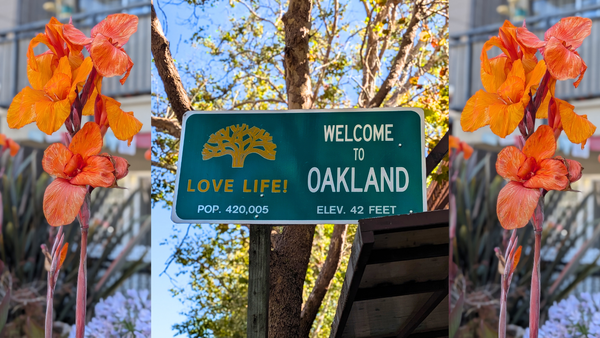
I breathed more deeply, trying to clear the scent from my brain as much as my lungs. I could smell the faint traces of wild fennel, trumpet flowers, and mimosa. I could feel the breeze cool my cheeks, which were suddenly flushed with anger. The moment was passing, washing away with the scents of a late afternoon in California.
Since that moment, though, I have been intently focused on the other things I can smell and what I feel because of them. The sun-baked, earthy scent of the fig tree that borders my little corner of California. The faintly moldy, mostly dusty smell of secondhand paperbacks. The sharp smell of basil, oregano, and thyme from one of the restaurants with open doors and patio seating. The classic smell of freshly roasted coffee and the soft, slightly bitter scent of beer poured from a tap.
These are scents that make me smile. They are being cataloged internally next to the “Clairol for Kids” shampoo, fresh biscuits, decaying oak and pine leaves, motor oil, GoJo cleaner, sunbaked leather seats, and Coppertone — all part of the “summer” scent collection in my heart and body.
And then, because memory has a sense of humor, I thought of Eric Church’s “Smoke a Little Smoke.”
Not because the moment was carefree, exactly. It wasn’t. But because somewhere between the cologne that ruined my evening and the breeze that helped me recover it, I remembered that smoke can mean more than one thing. It can be warning. It can be wreckage. It can also be a song blasting from the car with the windows down, a backyard fire, a late night, a little foolishness, a little freedom.
Scent can drag us backward, but it can also hand us something lighter on the way out.
We may forget some things over time: the exact words in a conversation or the order of events. But then the air shifts, and suddenly we're there again. Not remembering from a distance, but standing inside the moment.
Perhaps that's why scent feels so powerful. It reaches us before we can prepare ourselves. One breath can remind us what hurt. Another can remind us what healed.
And another, if we are lucky, can remind us to roll the windows down, turn the music up, and let the evening belong to us again.